The Problem
Every list started from zero
Sales teams spend 3–5 hours manually building lead lists with inconsistent data and no prioritization. Most of that effort was wasted — leads never got followed up because there was no consistent way to tell a strong prospect from a weak one before outreach began.
How It Works
Scrape, enrich, score, route
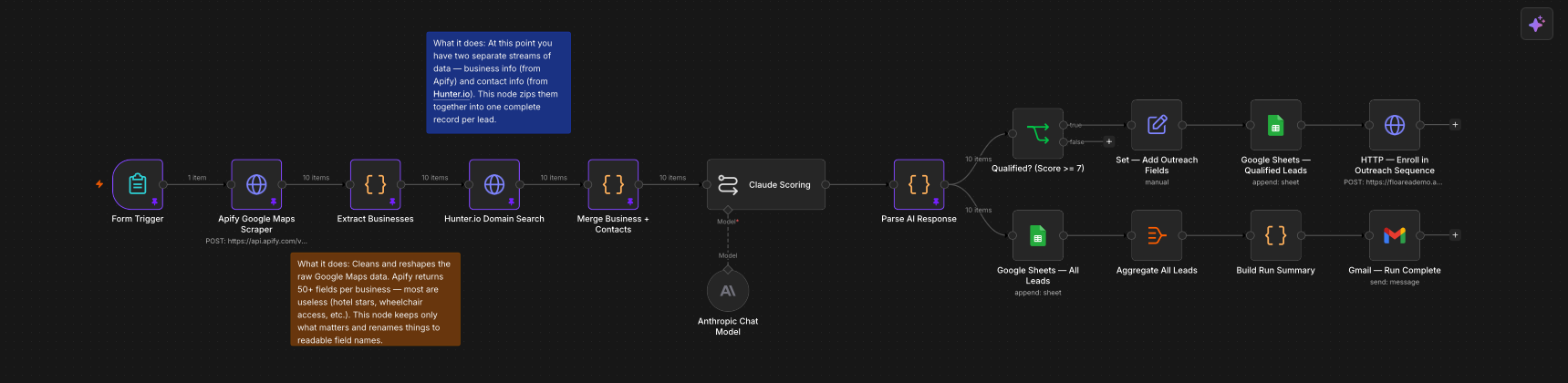
Rep submits the brief
A short form collects target industry, location, number of leads, and a free-text description of the ideal customer profile (ICP).
Scrape Google Maps via Apify
Calls Apify's Google Maps scraper with the industry + location as a search string, returning raw business listings — name, website, phone, rating, review count.
Clean and filter
A Code node strips Apify's 50+ raw fields down to what matters, derives a clean company domain from the website URL, and drops any listing with no website — nothing to enrich there.
Enrich contacts via Hunter.io
Looks up up to 3 email contacts per company domain. Wrapped in continueOnFail so a domain with no email data doesn't kill the run.
Merge and pick the right contact
Zips the business record and the Hunter.io result back together by index, preferring a senior title — CEO, Founder, Owner, Director — when multiple contacts are found.
Claude scores fit
Sends the merged lead plus the rep's ICP description to Claude, asking for a 1–10 fit score, a one-sentence rationale, and a qualified boolean back as strict JSON.
Fan out — no Merge node
Every lead, qualified or not, is logged to an "All Leads" sheet and rolled into a run-completion summary email. Leads scoring 7+ get appended to "Qualified Leads" and POSTed straight into the outreach sequence.
The result: a qualified lead list built in under 3 minutes per run, down from 3–5 hours manually. Every lead — qualified or not — is logged with an AI-written rationale, so reps can see why a lead was or wasn't prioritized, not just a raw score.
Tech Stack